Civil War Unit
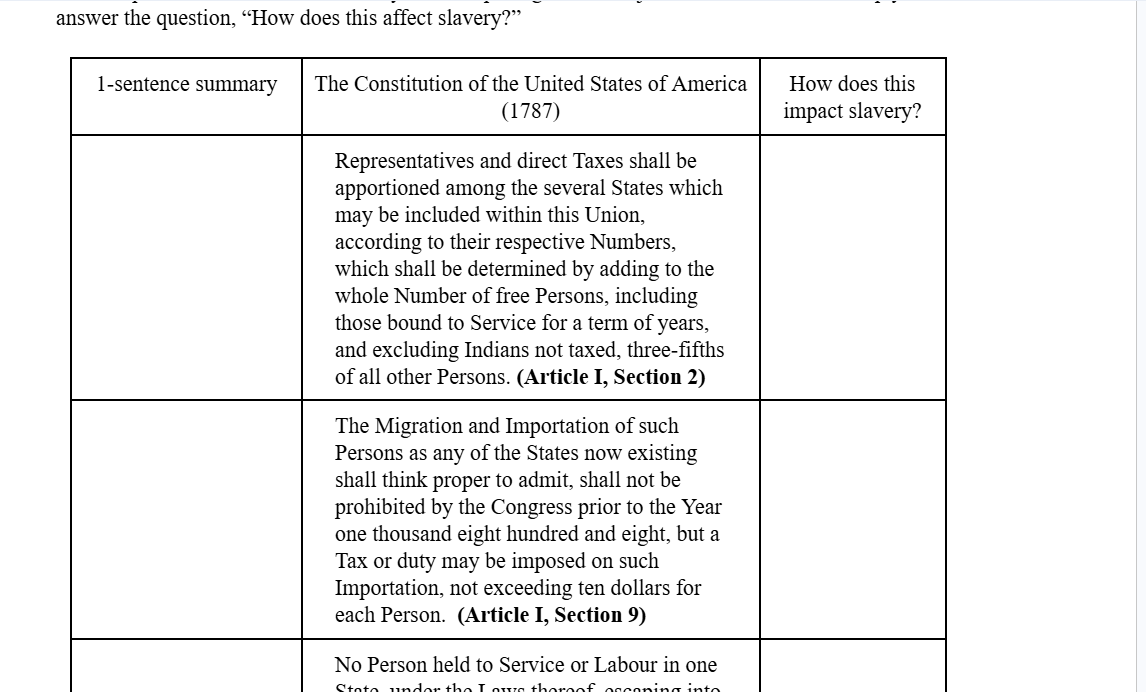
My students are always surprised that something that takes up so much space in the narrative of U.S. History - slavery - is only referenced three times in the Constitution.
We look at and dissect the three sections, discussing the impact that they have on the institution of slavery, and who would and wouldn’t like this inclusion.
We always discuss the 3/5s Compromise when we first talk about the Constitution, but returning back to it for a closer dissection creates more context around the passage and students are able to better understand and internalize its impact on the government at the time.
There’s power in students determining on their own (or with a buddy) what something in the Constitution says, and what it means.
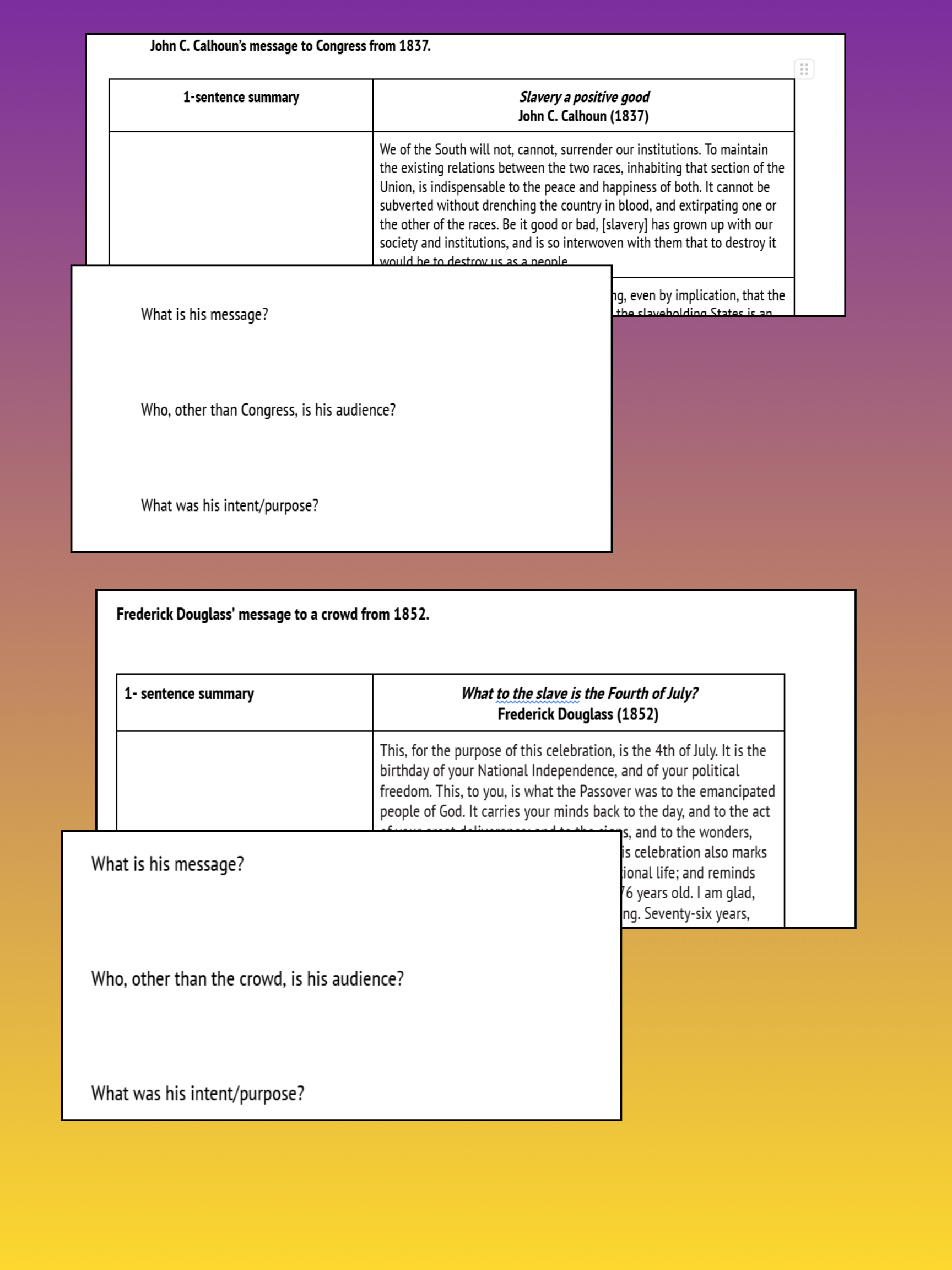
We look at John C. Calhoun’s “Slavery a positive good” in conversation with Frederick Douglass’s “What to the slave is the Fourth of July” to look at the two competing viewpoints of slavery in the antebellum period. While it’s tempting to call Calhoun’s speech propaganda, I hold back in order to wait and see what the students think after reading the excerpt.
“Positive good” is the second document by Calhoun we read; during our second unit we read the Nullification Doctrine (then in conversation with Jackson’s response to it), which is generally attributed to him. While we discuss the slavery speech, we talk about it in relation to the nullification speech to create greater context, and we also talk about whether we think Calhoun is making a good faith argument about slavery.
With Douglass, I tie in a short lesson on his biography and we talk about how that would impacted his speech.
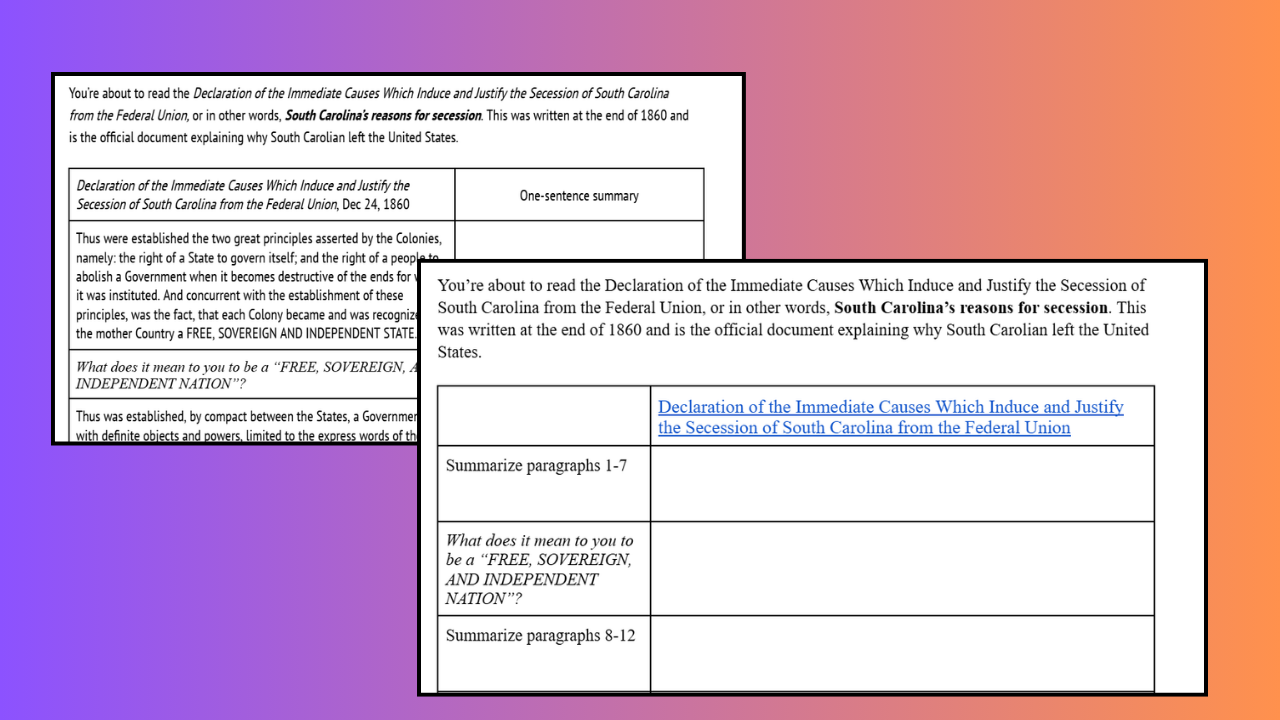
By the time we get to the secession of the South, some students are ready to move on without handholding. When we get to the first declaration of southern secession, students can choose from an “Expert” Option, which is the entire document and a scaffolded note sheet, or the “Scholar” Option, which is the traditional guided handout and an abridged version of the document.
In both cases, students use our normal routine to go through the document and are able to maintain the same conversation regardless of which version they read. After we read this we talk about why South Carolina decided to secede, and how we feel about the stated reasoning.
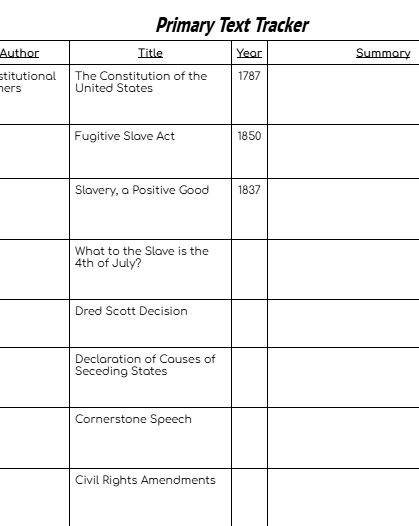
Document Tracker
Reading primary documents is hard, and keeping track of which ones said what is even harder. I have my students write down a little bit about each document as we go, and also provide bell work time to work on the tracker to ensure it gets done.
The students are assessed midway through the unit on the content - which they have access to while they work, and then at the end on the tracker itself. High school is about teaching content, yes, but it’s also about fostering good work habits.
At the end of the unit, they use the tracker to tell a story about slavery in the 19th century, and in doing so, they’re explaining a complex topic using primarily firsthand documents that are supported by the teacher and secondary resources, instead of the other way around. How powerful is that??