
Learning activities & practice opportunities
Lecture is out and student-centered learning is IN. Apparently, however, kids don’t enjoy constantly reading and summarizing, or reading an answering numbered questions. I rarely went all the way to true “gamification", but I frequently got pretty close. Providing activities that students would do to help them gain knowledge and use it - on their own and in teams - taps into the internal and external motivation of many students.
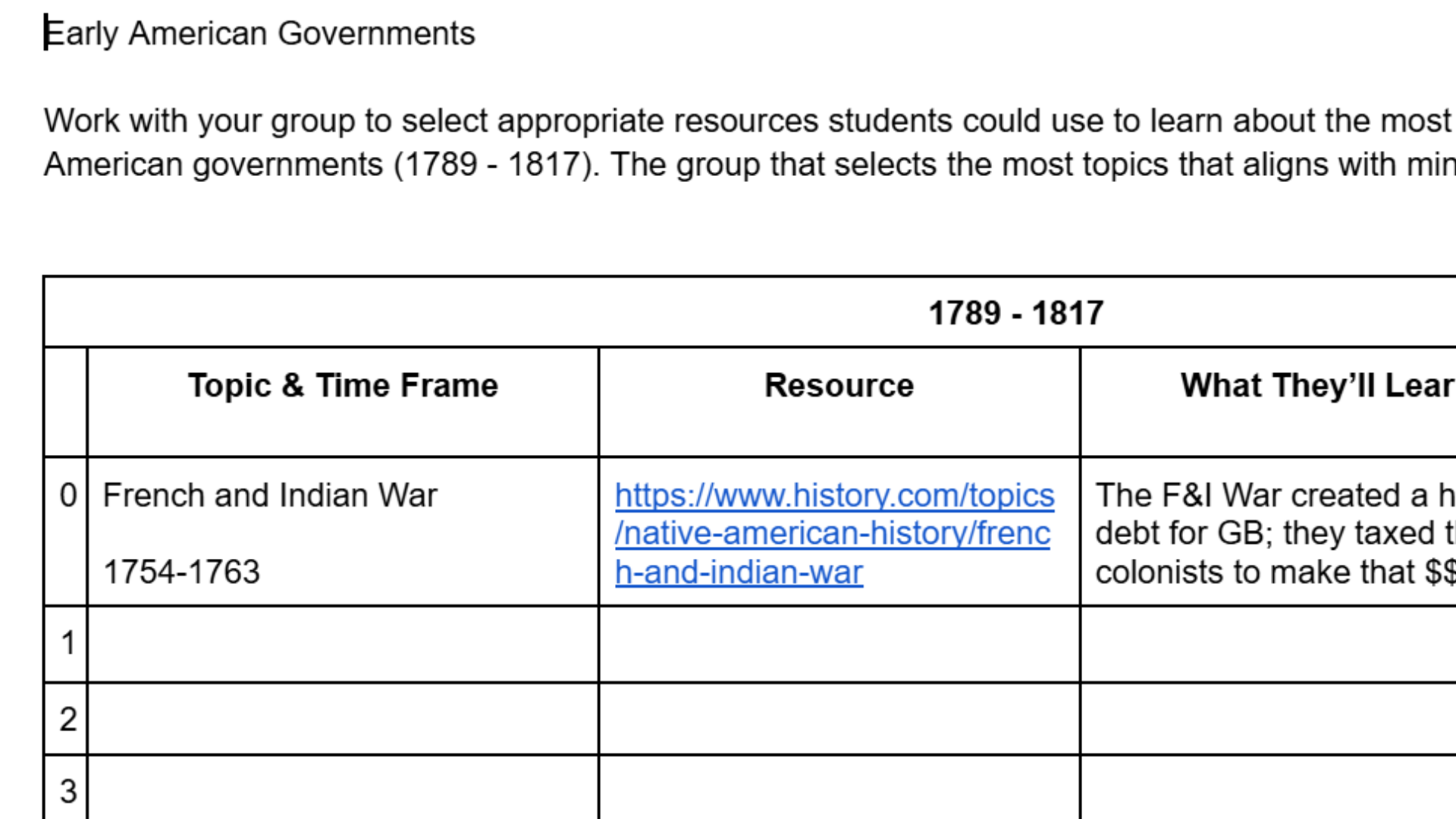
Students worked in groups to look up information about early American governments and administrations. Instead of answering questions or writing a summary, students discussed the resources they found and why they were or were not good resources.
Students needed to include:
the topic and time frame
a link to the online resources
what students using that resources would learn
why they need to learn it/why it’s important
I liked this activity because my students were required to look at and think about the information in a different way than they’re used to. It required them to think about what and how they’re learning, not just memorize facts.
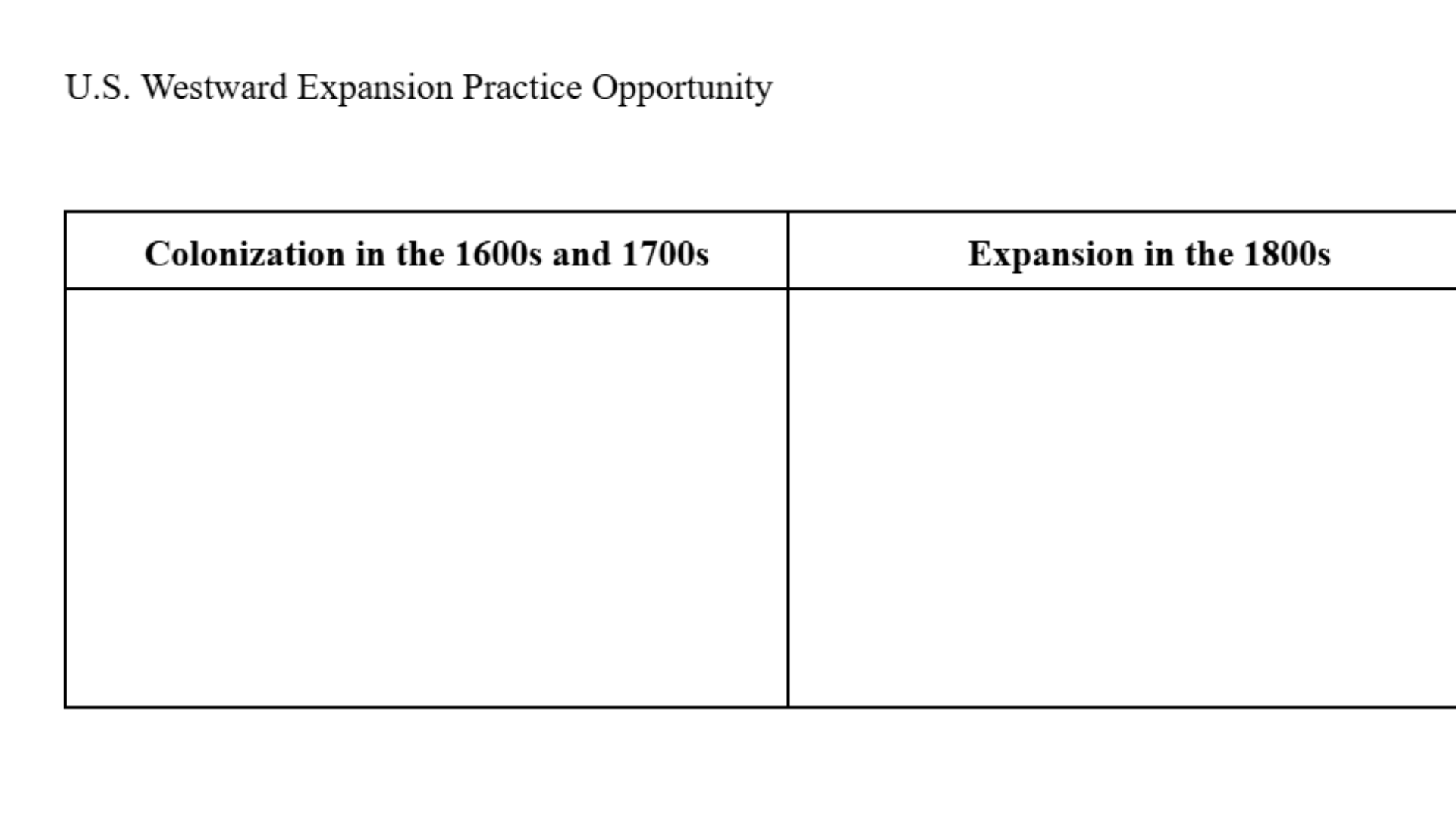
I believe in working smarter, not harder. I try not to require my students to write notes down, then rewrite those notes answering level 1 or even level 2 questions. Instead, their learning activities double as notes and require them to use one of their historical thinking skills.
For this activity, students learned about expansion in the early 1800s, and as they learned, they compared how that went with the colonization of the 17th and 18th centuries.
In this unit we worked on the historical thinking skill of comparing and contrasting across historical eras, so this activity began with comparing and contrasting through notes, in class discussion, and then the students were assessed on this same skill.
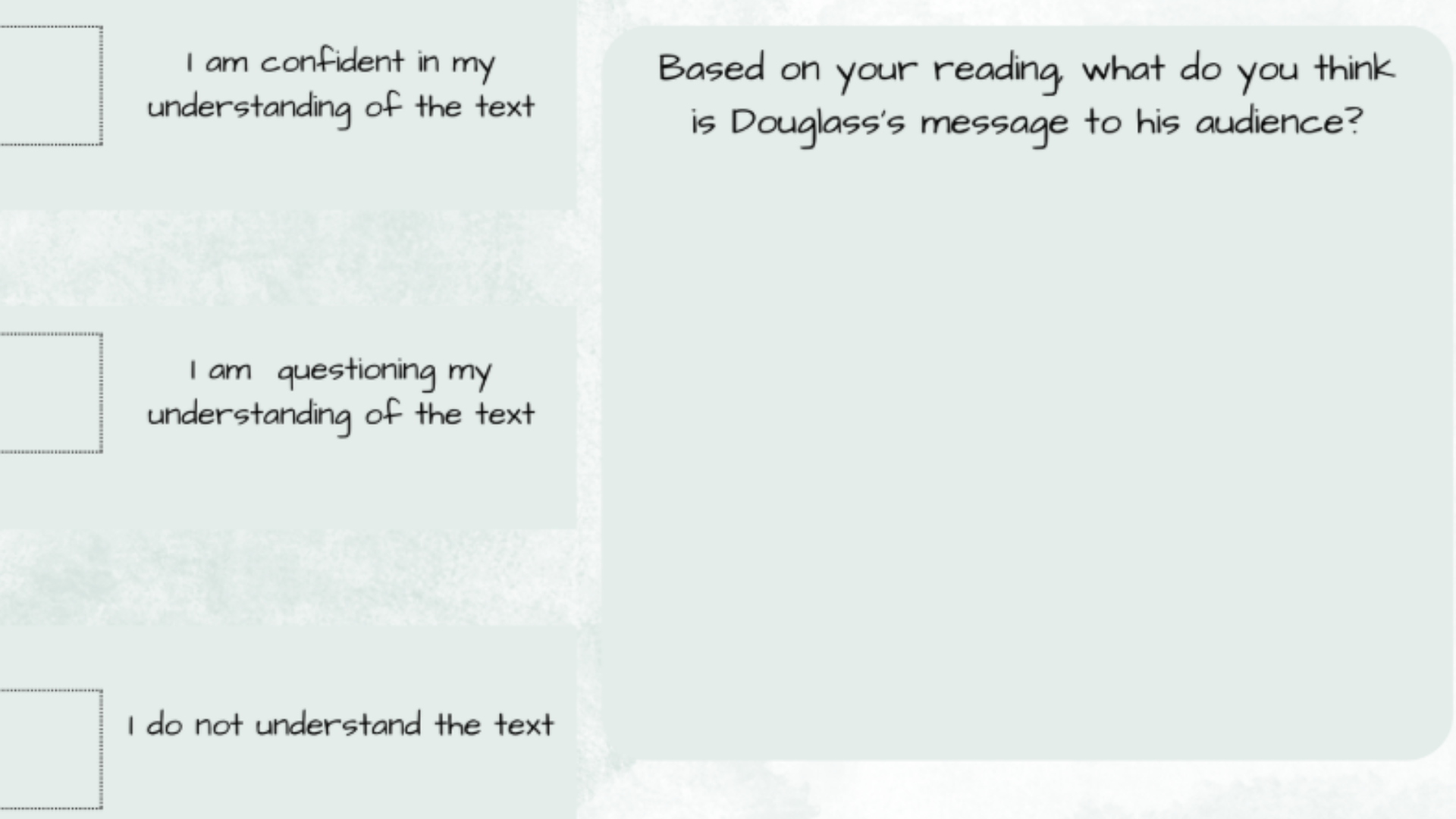
The third unit focuses entirely on primary documents from start to finish. For this activity, students read sections of Frederick Douglass’s “What to the Slave is the 4th of July” to get a better understanding of the perspective of enslaved people.
Answering a series of questions about the reading is tedious for students… and for the teacher, too. Asking the students for their interpretation of the message is more personal and gathers more information.
I try to check in with my students about how they’re doing, so I looked for opportunities to give them a chance to tell me what they are and aren’t understanding. This was especially true with primary documents.