
Primary Document Work
Primary documents are an important part of teaching history, especially U.S. History, which I taught for eight years. Whenever possible, and time allowed, I used primary documents to teach about historical events. Using strategies I learned from tah.org, students worked together, and then independently, to parse through the words of the historical figures themselves to bolster their learning.
Take a look at some examples of the ways in which I used primary sources, and then check out the Historical Art Analysis section for more primary sources, if you haven’t already.
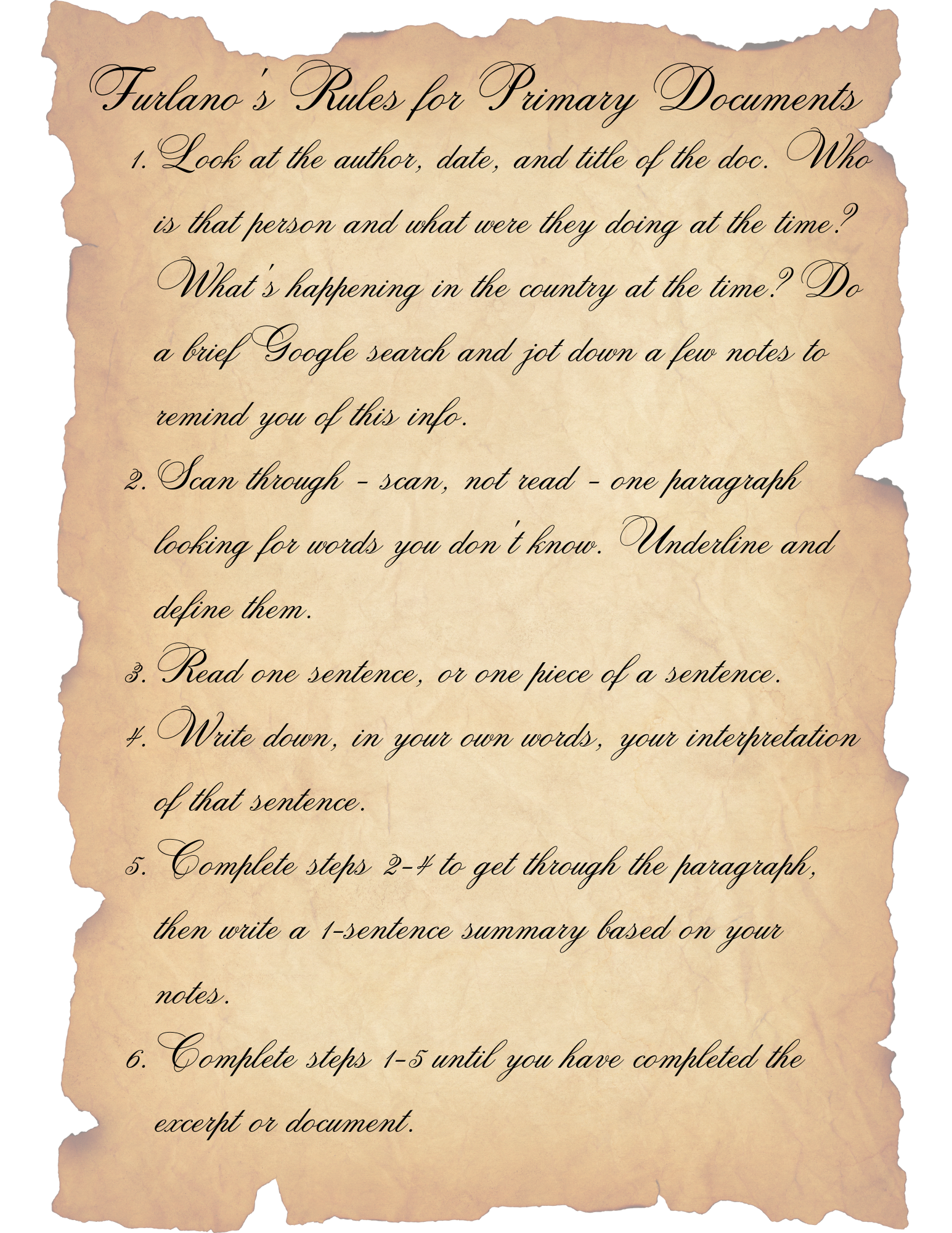
Rules of primary documents
While this isn’t a primary document, it’s the first item students get when we’re ready to begin using them, and it’s kept in a plastic sleeve in the front of their binder.
If the steps look familiar, they should; it’s a simplified version of close reading. Routines help classrooms stay on track, and this handout allowed me to emphasize the importance of the routine we use to read our primary sources.
Did the students use this document religiously? Probably not. You can lead a horse to water, but you can’t hold its head under the surface until it drinks. Or in other words, all I can do as the teacher is provide the resources for success and make myself available for assistance. Part of teaching is empowering students so they know how strong, intelligent, and powerful they are.
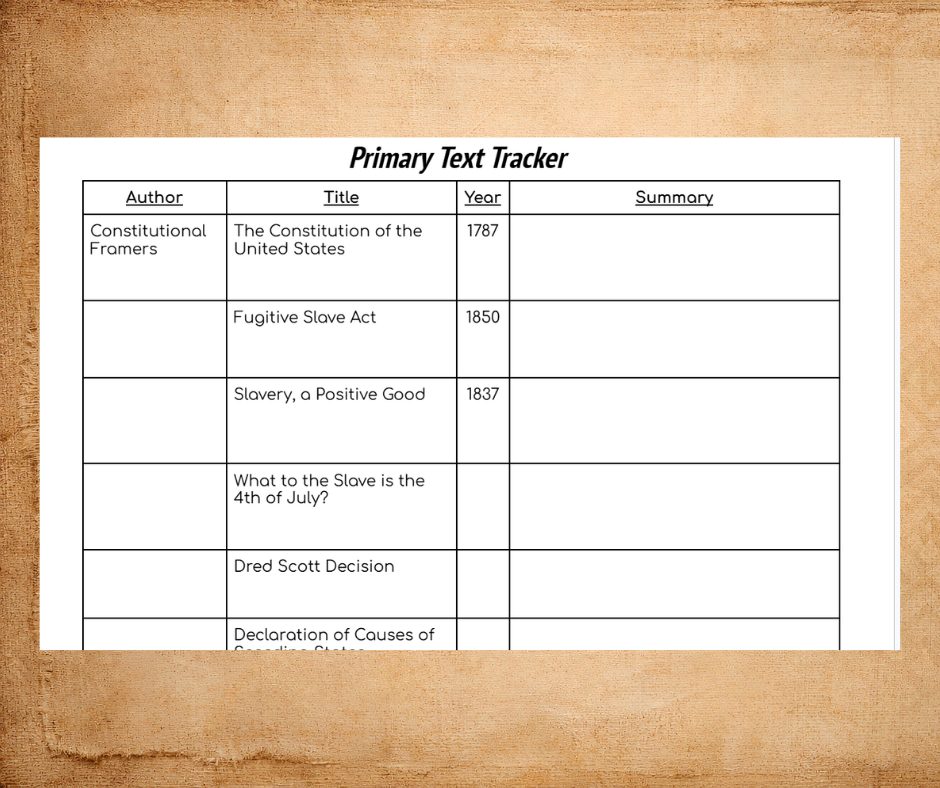
Civil War Unit
I am most proud of my Civil War unit, which relies on primary documents as the textual foundation of our learning. Students looked at primary documents almost every day to learn about the causes of the Civil War, and then the Reconstruction era that followed it.
Click the image to learn more about the unit.
American Imperialism Game

I believe that school shouldn’t be tedious, but I also don’t think we should “gamify” absolutely everything. But a little bit of gamifying never hurt anyone, right?
Students work in table teams to “translate” short excerpts from larger primary documents. The collection was pulled from Gilder Lehrman. Every group got an envelope with the excerpts on separate slips of paper. They worked together to write a 1-sentence summary and identify if the author was for or against American imperialism.
As they translated the excerpt, a representative would show me their summary and, if correct, could move their playing piece around the board, starting in the middle with the continental US, and ending at the Caribbean.